

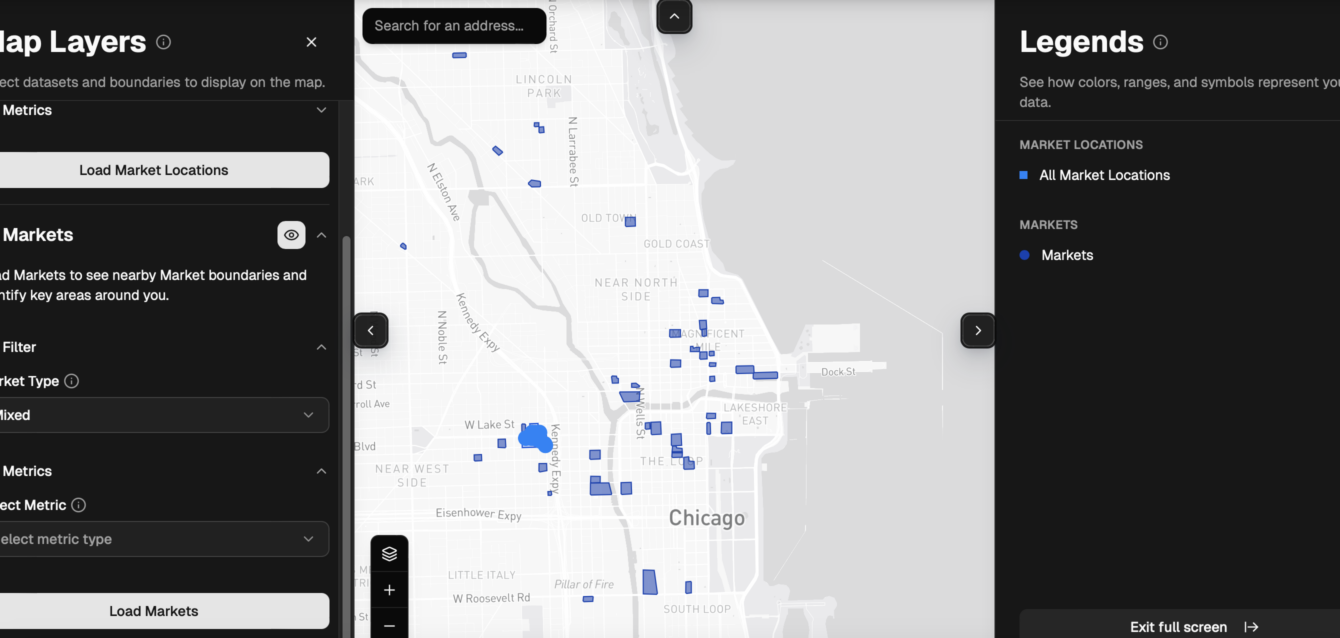
The secret to a low vacancy rate lies in using data to your advantage. From using AI-powered footfall analytics to mastering the art of the ‘pop-up’ lease, here is how the most successful landlords are outmaneuvering the competition to find good tenant matches for retail spaces.
How do commercial landlords find tenants?
Rather than waiting for potential tenants to come to them, successful commercial landlords are now headhunters who seek the ideal tenants using a mix of commercial data sources, property portals, and targetted advertising.
To find your ideal tenants, use a data provider to see where visitors go in your area before and after shopping. For example, after going to a gym visitors may go to a coffee shop, but if the nearest coffee shop is further away this could be an opportunity to fill the gap with a new tenant.
Commercial landlords also consider the customer demographics of current visitors to find retailers that match their interests. If the majority of visitors are students and families, then a stationary store can be an ideal tenant.
Ready to see how PassBy compares for your specific use case? Book a 15-minute walkthrough →
How to find tenants in retail
Attracting the right tenants is a tough process. To get businesses interested and promote your commercial space, you’ll need to have the data on side to best prepare your marketing strategy. Getting the wrong tenant will lead to underperformance and reduced ROI, so here are some ideas to fill that vacancy the right way.
1. Complete a void analysis
Finding the right tenant is crucial to prevent vacanies and ensure steady cash flow. One of the first steps should be to complete a void analysis.
Identify a gap in the market and estimate the odds of success if a brand opens a new branch in your location.
2. Rank potential tenants
Find potenial tenants and organise your approach by ranking stores. High performing brands at other local, regional and national level can be approached as potential tenants.
The key here is to target your approach with a tool that scores each brand based on the data. From there, you can go down the list with an evidence-based proposal based on performance of current tenants.
3. Promote your property online
Tenants do their research. Having a website, social media presence and photos of your location are essential to pull in interested tenants.
Implementing a marketing strategy is necessary to stand apart from the competition and get your voice out there.
After completing research on your clients, discover their social pages and follow them. Engage in the space and be active in sharing helpful and engaging content.
4. Make a brochure
Brochures aren’t just printed materials stating the size of the building, but are one of the resources tenants will look for and expect. The more information you can provide, the better! Here are some of the best things to include in your brochure:
- Details of the local area can to tenants understand the area and consumers
- High quality photos
- Details such as distance from other major cities, roads and nearby brick-and-mortar locations
- Floor plan of the layout
- Contact including a phone and email address
5. Get networking
Attending local networking and business events can help you build connections. Meeting potential tenants face-to-face gives you the chance to get to know them and vice-versa, improving trust and visibility.
Capitalize on face-to-face events by promoting your involvement on your social platforms. Follow up online to build-up relationships and discussion towards tenancy oppertunities.
6. Consider a brokerage firm
Brokers have a bigger pool of resources and time to dedicate towards your vacant tenancy. Brokers can give landlords and mall operators insights into market trends, recommended rates and the best possible tenants. These firms can do the work for you in promoting the vacancy to potential client, while checking for the tenant’s credit-score and estimated revenue.
However, you have less control over how the marketing is done and what businesses are targeted. Brokers also juggle multiple clients at once, so depending on the firm, your vacancy may not have as much attentention as you desire.
If you do use a firm, continue your efforts at a suitable scale and budget for you. This can be simply updating the information on your website and posting on your various social platforms on a regular basis.
7. Open up to other tenancy options
Is long term leasing the only option at your vacancy? Working with a landlord service to make contracts for short-term tenancy could prop up your income stream as more and more stores use pop-up shops as part of their retail marketing strategy.
Whether you’re offering long, short or a mix of contract options, working with a third-party contract service is an essential part of the procress.
8. Reach out to existing tenants
Word of mouth is powerful. Tenants you already have may be aware of businesses looking to move locations or open new branches. Current tenants are a source of information if you ask the right questions and build up a relationship over time.
9. Advertise on social media
Once you know who your prospective tenants are, the decision markers, and what platforms they’re using you can target advertising towards them. Pay to boost promotional content and target a campaign effectively.
If you are looking to increase the visibility of a property and reach a wider audience, sponsored and targeted posts are the ideal solution. By targeting specific demographics and geographic areas, you can optimise this investment to ensure you attract the perfect tenant.
You can generate a buzz around the property before it is even available to rent with sponsored content, creating a sense of competition and offering incentives such as reduced rent for signing a long-term lease.
10. Advertise in trade publications
While social media is king in this day and age, trade websites and other publications such as magazines still have a strong, specific audience. This audience is likely to be looking for a new space or will be in the near future.
See what business publications your potential tenants are already following – Business Leader, Business Matters and Real Business are common examples. You can further target your adertivising by choosing niche publications within your industry, such as fintech.
11. Data improves your chances
The best way to improve your chances of finding the right retail tenant is through data. There’s more data available than ever and harsnessing it can give you an edge when filling a vacancy.
Ready to see how PassBy compares for your specific use case? Book a 15-minute walkthrough →
Commercial leasing tips in retail
Finding tenants to fill a retail space isn’t easy. We’ve curated just a few tips to help you get started:
- Curate a tenant mix
- Use physical and digital features
- Advertizing
- Consider sustainability features
- Flexible leases
1. Curate a “tenant mix”
Having a good tenant mix will attract the widest range of customers, helping to stabilise your space. For shopping malls and retail corridors, this means having many types of retail all in one area such as a coffee shop, a gym, and apparel store.
- The Anchor: an anchor tenant is a reliable source of visitors such as a grocery store or a household name, national retailer.
- Local Stores: Having a local stores can give a retail space a unique identity, especially within the local community.
- Experience: service provider stores keep visitors in an area for longer and they may cross over to anchor stores or other locations within your space. These experience services can include a hair salon, a gym, a restaurant, etc.
2. Use physical and digital features
In 2026, retail is a blend of physical and digital. To attract tech-savvy tenants, show them your space supports their omnichannel strategy:
- Click-and-Collect Infrastructure: Designated parking spots or lockers for easy customer pickups.
- High-Spec Connectivity: Ensure the unit is “fiber-ready.” Modern retailers need lightning-fast internet for real-time inventory and interactive displays.
- Digital Footfall Data: If you can provide data on peak footfall hours or local demographics, you become an invaluable partner to a prospective tenant.
3. Advertise
Traditional signage is still useful, but finding the best tenants requires a proactive digital approach:
- Targeted Social Ads: Run social media ads targeted specifically at your preferred tenant types within a set radius.
- Direct Outreach: If you see a successful brand in a neighboring city that doesn’t have a location in your area yet, reach out directly. They might just be waiting for an invite.
- Virtual Tours: Use 3D walkthroughs so potential tenants can see the space online without visiting.
4. Consider sustainability features
Sustainability can be more than a “nice to have”; it’s a value driver and can help to future-proof your space.
- High energy efficiency ratings can help to keep tenant utility costs down.
- Highlighting green features (like EV charging stations in the lot or solar panels) can attract eco-conscious brands that have corporate sustainability targets to hit.
5. Flexible leases
Flexible leasing which includes agreements for pop-up stores, step-up rents, and turnover rents, offer appealing options to retailers and businesses you may not be able to attract with typical leasing agreements.
- Pop-up Store Leases: Short-term (3–6 month) agreements to “test” a brand. If they succeed, they transition to a long-term lease.
- Step-up Rents: Starting with a lower rent that increases as the business scales.
- Turnover Rents: A base rent plus a percentage of the tenant’s gross sales, which aligns the landlord’s success directly with the tenant’s.
Why using a data platform matters
Large, national brands such as Starbucks and Target already use data platforms for site selection. When landlords use the same or similar platforms, you’re speaking the same language. Using data platforms to back your claims also provides credibility and is expected by retailers when making your case.
Proof of visitor appeal
Using data can provide potential tenants with evidence that your space matches their needs. Using a data platform, you can show visitor trends over time which can prove foot traffic stability or growth.
You can also show potential retail tenants your current visitor demographics and show how they match the retailers ideal customer type.
Risk assessment
Choosing the right tenant is a big decision. A poor tenant match can mean you’ll have another vanacy once the lease is over and the costly, time-consuming process of finding another tenant will begin once more. Using a data platform lowers risk by helping you find tenants who match your space.
Data-backed rent increases
Data is your best negotiation tool. If your data shows your corner has 30% more foot traffic than the block over, you can justify a higher price per square foot. It moves the conversation from “This is too expensive” to “This is a high-yield investment.”
Ready to see how PassBy compares for your specific use case? Book a 15-minute walkthrough →