


Have you ever wondered how businesses decide where to set up shop, schools determine their student intake areas, or hospitals allocate services? The answer might just be in understanding the concept of catchment areas. These geographical zones are more than just lines on a map; they represent crucial data used by a variety of industries and services to streamline operations and improve strategic planning.
But what exactly defines a catchment area, and how can it be utilized effectively?
A catchment area is a geographic zone from which an business, service provider, or organization draws its clients and resources.
In this article, we’ll dive into the world of catchment areas, exploring their meanings, types, applications, and how they’re mapped, especially in sectors like retail.
What is a catchment area?
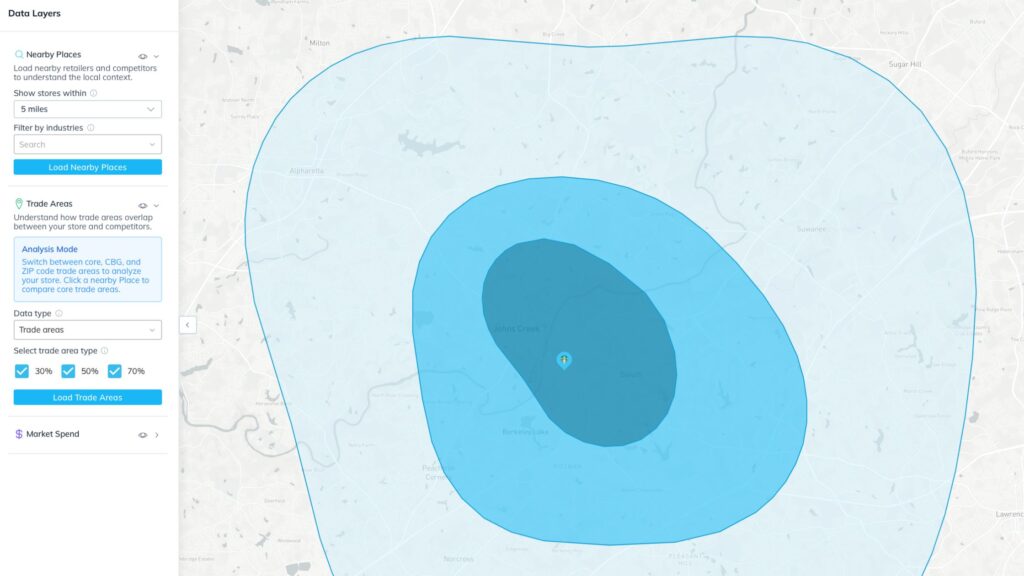
A catchment area is the geographic region from which a particular location draws its clients, service users, or visitors. Imagine it as an invisible boundary that defines which individuals are most likely to frequent a specific location due to their geographical proximity and accessibility.
Catchment areas vary significantly in size and shape, influenced by factors such as transportation links, population density, and natural or manmade barriers.
Whether it’s a school, a hospital, a retail outlet, or a banking institution, understanding its catchment area is crucial for efficient resource allocation and tailored services.
By utilizing this spatial concept, organizations can optimize their operational strategies, ensure effective service delivery, and streamline marketing efforts to cater to the needs of the community they serve.
pass_by offers the highest in market accuracy with 94% correlation to ground truth, over 15 data inputs, and a full 90 days of predictive feeds. To complete your analysis, book a demo.
Who uses catchment zones?
Making a catchment zone helps businesses and such as clothing stores and hospitals to serve a population more efficiently. Many organizations such as schools and healthcare providers also use catchment areas for decision making.
- Retailers: Catchment zones work by analyzing the market potential of a location and the relevant customer demographics. A catchment zone analysis is necessary when choosing a new retail location, analyzing the performance of a store, and can be part of a competitor analysis.
- Schools: Schools make catchment zones to see what students are eligible to enter the school based on their addresses. This is done manage class sizes and to allocate resources effectively.
- Healthcare providers: Catchment areas for healthcare providers are all about planning service delivery. How many doctors are needed to serve the community? A catchment zone analysis helps to answer questions like this, so a hospital can provide necessary and quality care.
Sign up to our newsletter so you never miss a report.
How do catchment areas work?
Ultimately, catchment zones are vital for efficient resource distribution, community planning, and regional development, ensuring services are geographically and demographically tailored.
In retail, catchment areas are geographic areas from which a retailer draws its customers. Retailers analyze where customers are coming from, how they’re getting to their stores, and how they’re travelling.
A catchment area analysis helps businesses understand customer demographics to enable strategic decision making about everything from choosing a store location to how best to target an advertising campaign.
How catchment zones are created
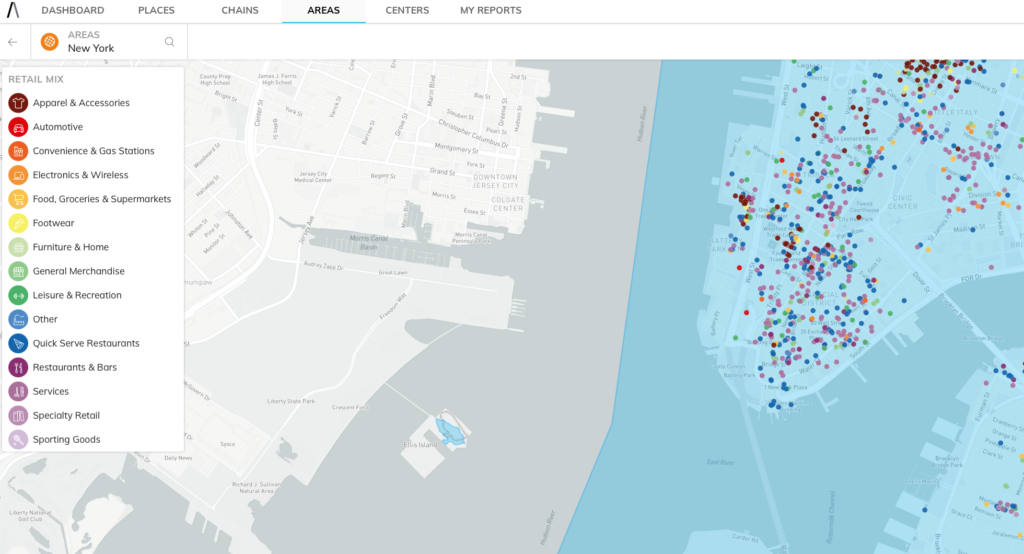
Catchment zones are created using mapping tools or software. First, businesses collect data on customer location, demographics and travel type and make customer segments. Then, they will analyze travel methods and define the catchment zone by:
- Distance: A catchment area takes into account how long customers have to travel to get to a location using various modes of transport like a car, public transport, walking, etc.
- Travel time: Some catchment areas are defined on how long customers take to get there. Some businesses such as hotels and event venues have a larger catchment zone while stores such as pharmacies focus on a shorter travel time to capture the local community base.
- Fot traffic: Using mobility data, retailers analyze the movement of visitors. This can include any overlap with other stores or nearby locations, actual ground truth data of store visits, and benchmarking performance against competitors to set expectations.
Types of catchment area
For retailers, the main three types of catchment area are primary, secondary and teritary. These three types define the immediate to outermost area of catchment and are used to identify visitor type.
- Primary: The immediate area around a retail store, facility or service location. This tends to be the area of the majority of local customers.
- Seconday: After the primary zone, the secondary area typically includes customers who visit less frequently than those in the primary area but still account for a large number of visits.
- Tertiary: This outermost area typically cotains customers further afield who visit on occasion but not, for example, everyday or week. While not as frequent in visits, these customers still contribute a significant percertange in sales.
What is catchment area analysis?
Catchment area analysis means discovering the geographic area from which a business or organization attracts its customers or users. This process involves examining demographic information, travel trends, and the local competition to get a clear picture of the potential customer base.
By doing an area analysis, businesses can finesse their location-based strategies, such as marketing efforts, product offerings, and where to place stores, for maximum impact.
When a catchment area analysis is used
Catchment areas play a crucial role for many businesses and service providers, enhancing their operational efficiency. You might perform a catchment area analysis when:
- Choosing a new retail location: Retail businesses are deciding on prime locations for a new store, adjusting their product lineup to suit local tastes, optimizing retail operations, or tailoring their marketing strategies.
- When making a franchise: Franchisers use it to evaluate the potential and viability of a new franchise site.
- To complete competitor analysis: Analysts apply catchment area information to gauge a local company’s market dominance or to assess the competitive implications of a merger.
- Plan delivery zones: To utilize and plan warehouse placements or predict delivery zones effectively.
- When defining school attendance boundaries: Schools may use catchment areas to determine which properties fall within a specific school’s zone.
What the analysis covers
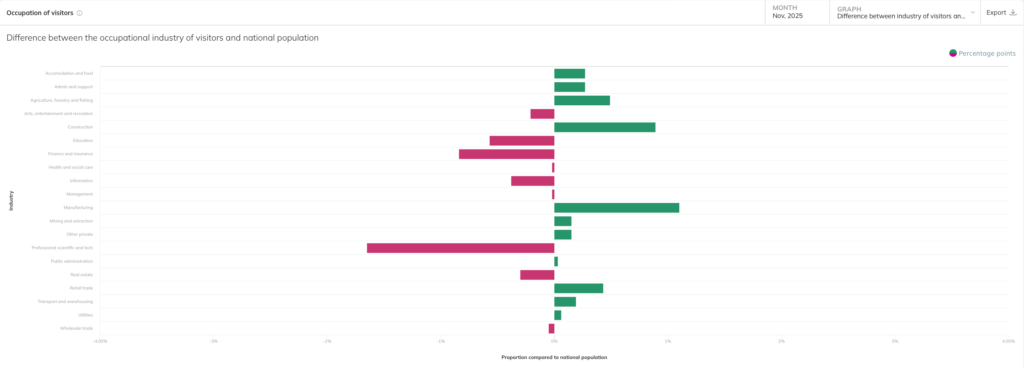
To complete a catchment area analysis for retail, you have to look at many factors that determine who the customers are and where they’re coming from. An analysis will cover:
- Demographics: Analyze age distribution, income levels, purchasing trends, and population density.
- Market Potential: Assess current locations and pinpoint regions ready for business or service growth.
- Customer Behavior: Observe travel habits, their willingness to travel, and how customers engage with your business.
- Competition: Recognize potential competitors and understand the local market competition.
Read more: Retail Customer Journey Maps Explained
How to identify a catchment area and complete an analysis
How you complete a catchment area analysis will depend on what you need the analysis for. A retailer’s analysis will look different to a schools. We’ll show you how retail businesses complete an analysis, and what tools and data you may need.
pass_by offers the highest in market accuracy with 94% correlation to ground truth, over 15 data inputs, and a full 90 days of predictive feeds. To complete your analysis, book a demo.
To complete a retail catchment area analysis, follow these steps:
- Define the objectives of your analysis. What are you trying to achieve? What are you trying to optimize? What are you trying to find out about your customers?
- Collect the relevant data. You can use a tool such as Almanac from pass_by or other tool to see customer data of your current stores as well as data about your competitors. Dempgraphics, visit numbers, and seeing top performing stores can help you define your catchment area.
- Visualize the area. Using a Geographic Information System (GIS) or other tool, define your catchment area by distance and travel time.
- Gain insights. Once you know your catchment area, you need to interpret the results for site selection, operations and marketinfg decisions.
- Know your competitors and partners. Once you know your area, you can see your nearest and top competitors within the area and their stores. Use this information for competitor analysis and to benchmark the performance of your stores within the area.
What data is needed for catchment area analysis
To effectively perform a catchment area analysis, you’ll need to gather a variety of data points tailored to the specific purpose of your analysis.
One crucial factor is geographical data, which provides the physical boundaries and demographics of the area in question. This includes topography and existing infrastructure, which can greatly influence the accessibility and attractiveness of the zone.
Another key data set is demographic information, such as age, income levels, and population density, which helps in understanding the characteristics of people within the area. This data can effectively illustrate who the primary users or residents are likely to be, and how they interact with the space.
Economic data is equally important, especially when assessing areas for commercial purposes. It provides insights into consumer behavior, spending habits, and overall economic activity including spending and income.
Additionally, competitor analysis data shows existing businesses or services that already serve the area, illuminating potential gaps or saturated markets.
For those in the banking sector, financial behaviors such as savings and borrowing trends are vital. They aid in tailoring services to specific customer needs within the catchment zone.
Lastly, integrating customer feedback or survey data can offer direct insights into consumer preferences and potential service improvements.
By synthesizing these diverse datasets, you can conduct a comprehensive catchment area analysis that is well-informed and strategically robust.
Where to get data for catchment area analysis
Analyzing your catchment area is key to optimizing your locations. Completing an analysis with accurate, reliable data gives you the insights you need to make decisions confidently.
To get the data you need for catchment area analysis, you’ll need foot traffic data and spend insights.
pass_by offers the highest in market accuracy with 94% correlation to ground truth, over 15 data inputs, and a full 90 days of predictive feeds. To complete your analysis, book a demo.