

The top “Big 4” grocery store giants in the U.S are Walmart, Albertsons Companies, Kroger and Costco. Walmart is the supermarket chain market leader with over 4,600 stores in the United States, Albertsons Companies operates under many banners such as Safeway and Vons, while Costco has a unique membership-based bulk buy model.
But how are these big supermarket chains performing? Are consumers still heading to grocery stores or has wider economic trends led to a decrease in visits? We explore how these supermarkets are performing in the U.S in foot traffic, retailer’s best months, and what this means for retail trends.
Ready to see how PassBy compares for your specific use case? Book a 15-minute walkthrough →
Q1 2026 foot traffic performance
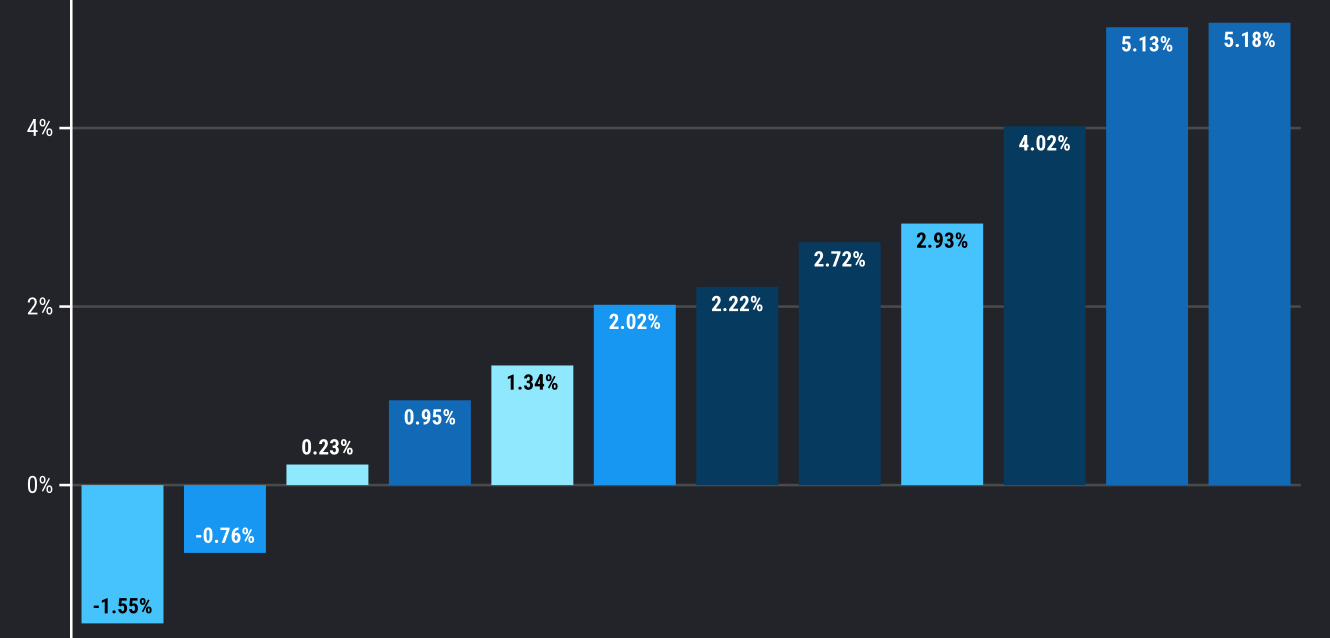
In Q1 2026, the US grocery sector exhibited a broadly positive foot traffic trend, with the majority of major chains seeing growth in store visits. Kroger led the market with a 5.18% increase, closely followed by Aldi at 5.13%. While most retailers performed well, Safeway and 7-Eleven saw declines in traffic, with growth rates of -0.76% and -1.55%, respectively.
Top grocery store chains in the U.S
Navigating through the sea of grocery chains in the U.S can be quite an adventure, given the sheer size and diversity of the market! The U.S grocery market is not only a cornerstone of daily life but also a massive industry.
It’s essential to recognize the different types of grocery chains, from typical supermarkets like Kroger to discount grocers like Aldi and warehouse clubs such as Costco. Each offers distinct shopping experiences designed to cater to a wide array of consumer preferences and needs.
The top grocery store chains in the U.S are:
- ALDI
- Kroger
- Walgreens
- Sam’s Club
- Bashas
- Trader Joe’s
- Walmart
- 7-Eleven
- Costco
- Giant Eagle
- Publix
- Safeway
Ready to see how PassBy compares for your specific use case? Book a 15-minute walkthrough →
1. Aldi
- Annual revenue: $120.89 billion (Global, 2023)
- Number of stores: over 2,000 stores in the U.S
- Size: over 45,000 employees in the U.S (2025)
ALDI is known for its discount prices, good deals, and recent plans to expand in the U.S. ALDI USA reported that it is adding more than 225 new stores in 2025, the most it has launched in a single year.
Aldi, known for its discount prices demonstrated strong momentum in Q1 2026, achieving a 5.13% overall visit growth.
This performance was second only to market leader Kroger (5.18%). The discount retailer, which operates over 2,000 stores in the U.S., showed consistent growth throughout the quarter, building on its strong +6.16% foot traffic increase from December 2024. Monthly performance peaked in January with a 7.21% gain, before moderating to 4.39% in February and 3.72% in March. Aldi’s Q1 2026 results solidify its position as a key growth driver in the U.S. grocery sector.
2. Kroger
- Annual revenue: $147.1 billion (2024)
- Number of stores: over 2,700 stores in the U.S
- Size: 414,000 employees (2023)
Kroger is known as one of the largest grocery chains in the U.S. Its many stores operate nationwide across 35 states, under two dozen umbrellas.
Kroger emerged as the top performer in Q1 2026, leading the market with a 5.18% increase in store visits. This overall growth rate surpassed their previous strong year-on-year performances, such as the +4.41% spike in December 2024 and the +4.00% gain in March 2025. The quarter was initially propelled by an exceptional January, which saw visit growth peak at 10.86%. However, this strong momentum decelerated significantly throughout the quarter, with February’s growth dropping to 5.28% and March seeing growth nearly stall at a minimal 0.07%. Despite the deceleration in the latter months, the overall Q1 result of 5.18% was strong enough to place Kroger just ahead of competitors like Aldi (5.13%).
3. Walgreens
- Annual revenue: $147.658 billion (2024)
- Number of stores: around 8.500 stores in the U.S
- Size: over 312,000 worldwide (2025)
Walgreens is known as a leading pharmacy and drugstore retailer in the United States, offering a wide range of products and services, including prescriptions, health and wellness products, photo services, and more.
Walgreens is also known for being one of the largest chains in the U.S, competing with big names like CVS and Walmart. Walgreens saw it’s annual revenue increase in 2024 from 2023 by 6.17%.
Walgreens delivered a strong recovery in Q1 2026 with a 4.02% overall visit growth. This performance reverses the previous trend of visits decreasing in Q3 2024 and Q1 2025, and the slight dip seen in Q4 2024. The chain’s Q1 success was primarily fueled by a significant surge in February, which recorded the highest monthly growth at 7.19%. Visits were also strong in January at 4.74%. However, similar to other major chains, Walgreens experienced a sharp slowdown toward the end of the quarter, with March visit growth falling to 0.57%. The overall Q1 2026 growth places Walgreens among the top performers, demonstrating a clear rebound in foot traffic.
4. Sam’s Club
- Annual revenue: $84.3 billion (2023)
- Number of stores: around 600 stores in the U.S
Sam’s Club is known for being a membership-only supermarket owned by Walmart.
Sam’s Club achieved an overall visit growth of 2.93% in Q1 2026. This performance marks a significant recovery from the substantial -16.31% average drop experienced in Q1 2025. The quarterly growth was characterized by a steady start in January at 2.43%, followed by a peak in February at 5.49%, before moderating to 1.16% in March.
5. Bashas
- Annual revenue: $1.7B (2023)
- Number of stores: 54 stores in the U.S
- Size: 5,001 – 10,000 employees (2025)
Bashas is known for its supermarket stores in Arizona. Owned by Raley’s Supermarkets, Bashas is a traditional grocery store chain with most of its stores in Arizona and New Mexico.
Bashas achieved an overall visit growth of 2.72% in Q1 2026. This performance marks a notable recovery from a -12% decrease experienced in Q1 2025. The chain’s quarterly success was characterized by a monthly performance of 3.19% in January, a peak of 3.26% in February, and 1.81% in March.
6. Trader Joe’s
- Annual revenue: $16.5 billion (Estimate, 2023)
- Number of stores: over 2,000 stores in the U.S
- Size: over 600 employees in the U.S (2025)
Trader Joe’s a nationwide grocery chain known for its own brand items, healthier food product choices, and organic goods.
Trader Joe’s, a nationwide grocery chain recognized for its focus on own-brand items, healthier choices, and organic goods, posted a moderate overall foot traffic growth of 2.02% in Q1 2026. This performance is consistent with the retailer’s ability to drive visits through its private label strategy, which contributed to a previous quarter increase of over 3% in Q4 2024. The Q1 2026 period exhibited monthly volatility: starting with a 2.37% gain in January, visit growth slowed dramatically to 0.36% in February, before recovering strongly to a quarterly peak of 3.73% in March.
7. Walmart
- Annual revenue: $648.125B (2024)
- Number of stores: over 4,600 stores in the U.S
- Size: 2,100,000 employees (2025)
Walmart is known for being one of the biggest supermarket chains in the world. Walmart is also the parent company of Sam’s Club.
Walmart, one of the biggest supermarket chains in the world with over 4,600 stores in the U.S. and $648.125B in 2024 annual revenue, recorded a positive but moderate 2.22% overall visit growth in Q1 2026. This marked a strong recovery compared to the previous year’s difficult Q1 2025, which saw visits fall by over 17%. The grocery giant’s performance showed significant monthly volatility this quarter, starting with strong gains in January (+4.34%) and February (+5.15%), but ending the quarter with a decline of -2.10% in March. Despite this late-quarter dip, the overall Q1 growth shows Walmart—the parent company of Sam’s Club—maintaining its market presence and recovering from earlier periods of consumer behavior shifts.
8. 7-Eleven
- Annual revenue: $79.79 Billion (2023)
- Number of stores: over 12,000 stores in the U.S
- Size: over 135,332 employees worldwide (2025)
7-Elven is known for being one the largest convenience store chains in the world while Walmart is the biggest grocery store chain globally.
7-Eleven, one of the largest convenience store chains globally with over 12,000 stores in the U.S., was one of the few retailers to see a decline in foot traffic during the generally positive Q1 2026, recording a -1.55% decrease in store visits. This decline contrasts with its performance in Q3 2024, where it saw one of the lowest quarterly decreases at only 1.92%. The Q1 2026 result was heavily influenced by a significant drop in January, with foot traffic falling by -4.60%. However, the chain showed signs of stabilization in the later part of the quarter, as visit growth nearly flatlined in February (+0.13%) and March (+0.03%). Despite this negative overall performance, the chain remains a massive presence in the market.
9. Costco
- Annual revenue: $249.6 billion (2024)
- Number of stores: over 610 stores in the U.S
- Size: over 210,000 employees in the U.S (2025)
Costco is known for its membership-scheme and warehouse-style supermarket stores which sell bulk grocery items at discounted prices.
Costco, a membership-only, warehouse-style retailer with over 610 U.S. stores, recorded a 1.34% overall visit growth in Q1 2026. This performance represents a recovery from a significant Q1 2025 decline of over 17%. The monthly breakdown showed 4.18% growth in January and 2.11% in February, followed by a -1.86% decrease in March.
At PassBy, we offer the highest in market accuracy with 94% correlation to ground truth, over 15 data inputs, and a full 90 days of predictive feeds. Sign up to our newsletter so you never miss a report.
10. Giant Eagle
- Annual revenue: $11 billion (Estimate, 2024)
- Number of stores: over 210 stores in the U.S
- Size: over 35,000 employees (2023)
Giant Eagle is known for being a regional grocery store chain and for owning fuel/convience store chain GetGo.
Giant Eagle recorded a 0.95% overall visit growth in Q1 2026. This performance followed a small increase of just over 1% in Q4 2024. The quarterly results were driven by growth in January (1.61%) and February (2.1%), which offset a -0.68% decline in March. Notably, Giant Eagle’s Q1 2025 dip of almost 10% was less severe than the decreases seen by larger competitors like Walmart and Aldi during that same period.
11. Publix
- Annual revenue: $59.7 billion (2024)
- Number of stores: over 1,300 stores in the U.S
- Size: over 255,000 employees (2023)
Publix is known for being an employee-owned supermarket chain with stores in the south of the United States.
Publix, an employee-owned supermarket chain in the south of the United States with over 1,300 stores, recorded an overall visit growth of 0.23% in Q1 2026. This performance follows a strong +8% growth in December 2024 and an increase of over 3% in March 2025. This quarter’s growth was driven by a recovery from a January decline of -1.15%, followed by moderate increases of 0.61% in February and 1.28% in March.
12. Safeway
- Annual revenue: $60 billion (2024)
- Number of stores: over 900 stores in the U.S
- Size: over 250,000 employees as part of Albertsons Companies
Safeway is owned by Albertsons and is known for its store locations across the West coast of America.
Safeway, a chain with over 900 stores across the West coast of America and owned by Albertsons Companies, was one of the few retailers to record a decline in foot traffic in Q1 2026, posting an overall decrease of -0.76%. This negative result follows the general consumer trend of a Q1 drop, though it comes after a strong October 2024 performance (+5.83%) and high visitor numbers in December 2024 (over 110 million visitors). The Q1 2026 decline was characterized by sharp monthly deceleration: the chain started the year with a positive 3.12% increase in January, but this momentum reversed quickly, leading to a -1.76% drop in February, and ending the quarter with a more significant decline of -3.47% in March.
Ready to see how PassBy compares for your specific use case? Book a 15-minute walkthrough →
FAQs about the top grocery store chains in the US
What is the world’s largest grocery store?
Walmart is the largest grocery store not just in the States but in the world by revenue (over $600 billion) and by number of employees (over 2.3 million worldwide). This makes Walmart the largest supermarket chain in the world along with the world’s biggest private employer.
What is the biggest Walmart in the United States?
Store 2152 in Albany, New York is the largest Walmart in the United States. The store has 260,000 square foot of space spread over two floors.
What is America’s favorite grocery chain?
According to the 2025 American Customer Satisfaction Index, consumer preferences for top grocery chains highlight Publix and Trader Joe’s as the national leaders in customer satisfaction. Regional favorites vary: the Northeast prefers Wegmans and Aldi; the Midwest favors Sam’s Club and Aldi; the South demonstrates loyalty to H-E-B, Publix, and Aldi; while the West shows a strong preference for Trader Joe’s and Costco.